 Cypress
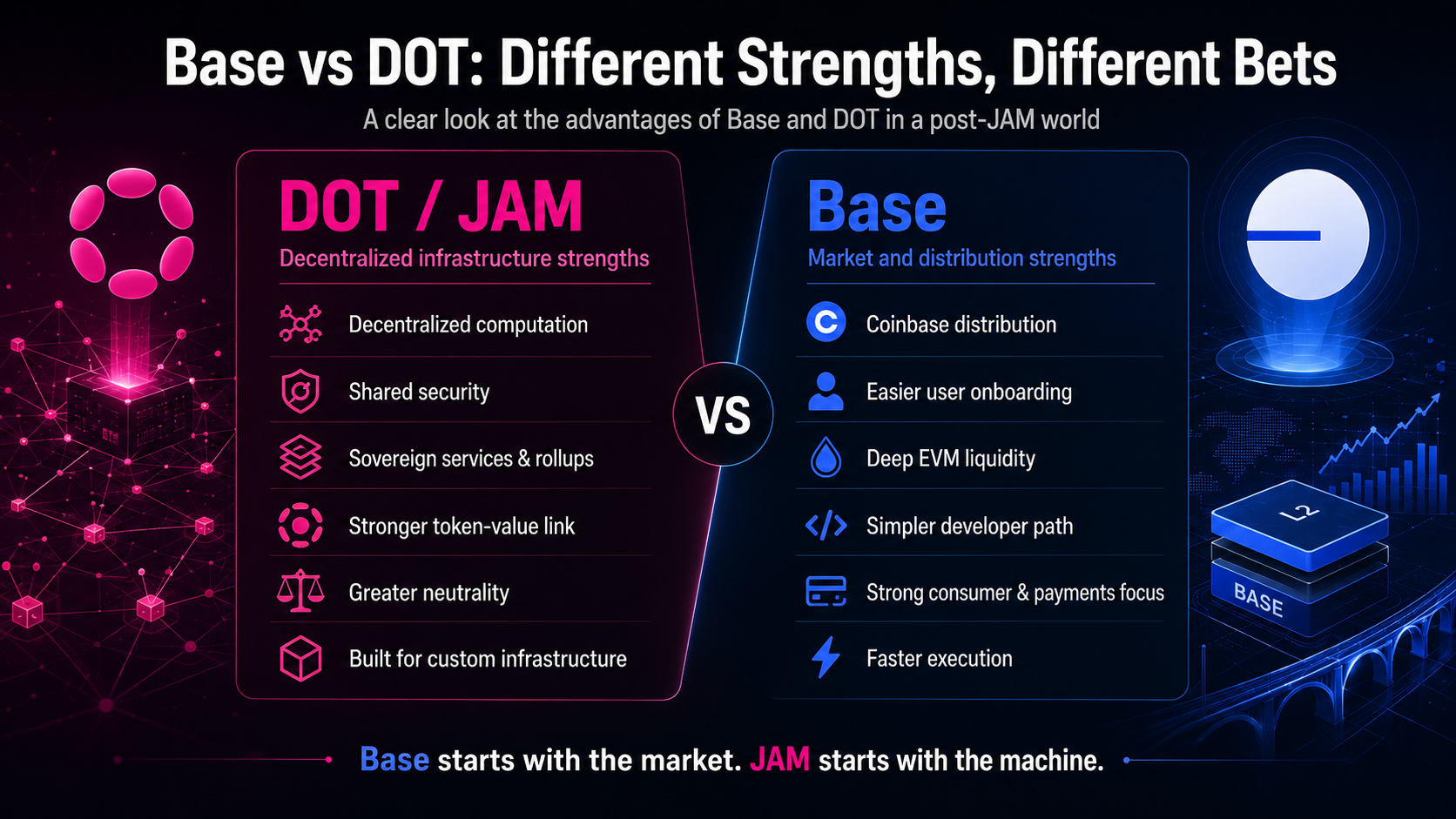
I entered crypto in 2012 with a simple belief: decentralization could make access to finance more equal.
At the time, an ordinary person in Vietnam had almost no practical way to buy shares in major American companies. Bitcoin was different. Anyone with an internet connection could participate.
Bitcoin did not care where I was born, which bank I used, or whether a financial institution considered me qualified.
That was the original promise I saw in crypto.
I chose Bitcoin because it was decentralized. Later, I chose Ethereum over XRP for much the same reason. Ethereum felt more open, more permissionless and closer to the spirit that had first attracted me to Bitcoin.
Those decisions worked extremely well.
2017 was an extraordinary year for me. Then 2021 became another exceptionally successful cycle.
When the same way of thinking is rewarded so strongly in two different market cycles, it becomes difficult not to mistake it for a universal law.
I started to believe that I had not simply chosen a few successful assets. I thought I had understood the direction of the entire industry.
Decentralization was valuable.
Decentralized networks would eventually win.
And the more decentralized project would probably be the better investment.
That belief eventually led me to Polkadot.
Why Polkadot Made Sense
Polkadot offered one of the most convincing responses to the blockchain trilemma.
Instead of forcing every application into a single execution environment, it allowed specialized chains to operate in parallel while sharing security and communicating with one another.
Bitcoin had introduced decentralized money.
Ethereum had introduced programmable decentralized applications.
Polkadot appeared to be the next step: decentralized infrastructure for many different blockchains, each designed for a specific purpose.
From an engineering perspective, it was elegant.
That elegance mattered to me. I believed that stronger architecture, shared security and deeper decentralization would eventually produce a stronger ecosystem.
JAM may take that idea much further.
If JAM launches and works as intended, Polkadot will no longer be understood mainly as a Relay Chain connecting parachains. It may become something closer to a decentralized computing platform where services purchase computation and execute verifiable work across a distributed validator network.
That would give DOT a broader economic role.
DOT would not simply support one smart-contract chain. It could become the native asset of a market for decentralized computation, blockspace and specialized services.
This is the strongest case for DOT in a post-JAM world.
JAM could support sovereign rollups, specialized financial systems, decentralized sequencing, bridges, data-processing services and applications that need more control than a normal smart contract can provide.
In theory, it is a powerful design.
But crypto has repeatedly shown that a powerful design is not the same as a successful market.
JAM Can Improve the Machine
JAM can improve Polkadot’s architecture.
It cannot automatically create users.
It cannot guarantee stablecoin liquidity, simple wallets, strong consumer applications, effective distribution or developers willing to learn a new computational model.
This is the problem Polkadot has struggled with for years.
Its technology may solve important infrastructure problems, but ordinary users do not experience architecture directly. They experience applications, liquidity, transaction speed and whether anyone else is using the network.
A technically impressive system can still remain commercially weak.
For that reason, JAM should not be judged only by throughput, parallelism or the elegance of its design.
The more important question is:
How much economically valuable computation will people actually purchase and execute through JAM?
If demand becomes meaningful, JAM could create a much stronger economic case for DOT.
If demand remains limited, JAM may still be a major engineering achievement without becoming a major economic network.
Base Begins From the Other Direction
Base does not begin with a new theory of decentralized computation.
It begins with Ethereum, the EVM and an existing market.
Developers can use Solidity, familiar wallets, existing infrastructure and widely adopted token standards. They do not need to learn an entirely new architecture before building a product.
More importantly, Coinbase stands behind Base.
That gives Base a very different advantage.
Coinbase can connect the network to users, fiat infrastructure, stablecoins, merchants, institutions and consumer products. It has the capital and organizational capacity to support the ecosystem over a long period.
Base’s greatest strength is therefore not necessarily better blockchain architecture.
Its greatest strength is distribution.
This matters more than many crypto investors like to admit.
The market does not reward code simply because it is decentralized.
Some of the most valuable software in the world is controlled by centralized legal entities such as OpenAI, Google and Meta.
The market pays for more than code. It pays for capital, talent, infrastructure, brand, distribution, legal responsibility and the ability to keep improving a product.
Code can be copied.
An organization capable of turning code into a product used by millions of people is much harder to copy.
Why Base May Win More Users
Base is likely to remain stronger in areas where convenience, liquidity and distribution matter more than maximum neutrality:
- stablecoin payments;
- trading and DeFi;
- tokenized financial assets;
- consumer applications;
- merchant payments;
- fiat integration;
- products that need access to a large existing user base.
Most users do not study consensus architecture before making a payment.
They care whether the transaction is cheap, fast and accepted.
Most developers do not want to design a new blockchain unless their product genuinely needs one. They want to build an application and reach users.
Base is designed around that reality.
It starts with the market and builds infrastructure around it.
The Cost of Coinbase’s Strength
The advantage of having Coinbase behind Base is also its clearest risk.
Base still depends heavily on Coinbase’s strategy, reputation and operational role.
That may be acceptable for many applications. It may not be acceptable for all of them.
A consumer payment application may reasonably prioritize convenience and distribution.
A politically sensitive system, neutral financial infrastructure or a service designed to survive independently of any corporation may need something closer to JAM.
Base combines open Ethereum infrastructure with the power of a centralized organization.
JAM aims to reduce the need to trust any single organization at all.
Neither model is free.
Base gains speed and distribution by accepting institutional dependence.
JAM gains neutrality and sovereignty by accepting more complexity and coordination costs.
Two Different Bets
I no longer see Base and DOT as two versions of the same investment thesis.
They are two different bets on the future of crypto.
Base is a bet that institutional distribution, liquidity and user experience will bring the next major wave of activity on-chain.
DOT under JAM is a bet that the world will eventually need a neutral, decentralized and programmable market for computation.
Base is more likely to attract financial applications and ordinary users in the near term.
JAM may offer a stronger foundation for sovereign services and systems that cannot safely depend on one company.
Base offers a shorter path from application to user.
JAM may offer a stronger path from computation to credible neutrality.
The Token Question
The investment comparison is also uneven.
Base currently uses ETH. Base can become highly successful while much of the value flows toward ETH, Coinbase, applications, stablecoin issuers and the wider Ethereum economy.
DOT has a clearer theoretical role within JAM.
It can secure the network, support governance and provide access to computational resources.
That gives DOT a more direct connection to the protocol’s economic activity.
But a clear token role does not guarantee demand.
DOT benefits only if JAM attracts real users, real developers and real economic activity.
A technically sound value-capture mechanism is useless when there is little value to capture.
How I See It in 2026
I still believe decentralization matters.
But I no longer believe every product must maximize it.
Bitcoin needs very high censorship resistance because independence from any single institution is central to its value.
A game, social application or payment service may not need the same level of decentralization.
Some products need distribution more than sovereignty.
Others need sovereignty more than distribution.
The mistake is turning one principle into an answer for every problem.
My success in 2017 and 2021 strengthened my belief in decentralization to the point where I began to see it as both a moral principle and an investment law.
It was never that simple.
Decentralization can protect a system from control, but it is expensive.
Centralized coordination can create speed, accountability and distribution, but it also creates dependence.
The right balance depends on what the system is trying to achieve.
Base already has a market.
JAM may build a more powerful machine.
The decisive question is whether JAM can turn technical flexibility into real demand before Base turns distribution into overwhelming network effects.
Base starts with users and builds deeper infrastructure around them.
JAM starts with infrastructure and must still find its users.
Both can succeed.
But they will succeed for very different reasons.
— TienCypress